From BBS to Bluesky: Thirty Years of Building Community
I launched MajorNelson.com in May 2004. I’d moved to the Xbox team the year before, after a couple of years running MSN Music, and before that I spent more than a decade in radio. Radio taught me something I’ve used every day since: you’re talking to one person, usually in a car, and you’d better be worth their time. Times have changed (who listens to the radio anymore?), but the approach hasn’t. The car is a phone now, and the person in it is one swipe away from leaving. I still want to be worth their time.
My first online community came before any of that. In the early ’90s I was dialing into local bulletin boards at 2400 bps, watching each screen crawl in one line at a time. Those boards were tiny, but that’s where I first saw strangers become regulars and regulars become a community. I’ve been helping build communities ever since.
Early days at Microsoft
Microsoft got into blogging early, but it was a small club. Korby Parnell, who was there for it, wrote in 2005 that there were 30 or 40 Microsoft bloggers in early 2003 and a few hundred by the end of that year. Nearly all of them were developers writing for other developers. That was great work, and a lot of it still holds up. I wanted to write for the people playing games on their couch.
I was the first person at Xbox to blog. My bet was that Xbox should talk to its community directly and in its own voice, instead of waiting for a press release or a magazine to say it for us. Xbox Live had turned the console into something that changed every week. Players needed a voice from inside the team that changed as fast as the product did.
There was no playbook for that. Korby also pointed out that every Microsoft executive got special PR training. Meanwhile, some guy on the Xbox team was posting news under his gamertag.
It worked because of where I sat. I wasn’t in a PR agency or a corporate comms department. I was on the product team, as director of programming for Xbox Live, and I sat with the engineers who built the systems. I worked next to the people building the Xbox Live service and the dashboard updates, and I followed the consoles and games from prototypes on a bench to boxes on a shelf. When a feature shipped, I’d usually watched it break a few times first. When the service went down, I could ask the people fixing it what happened and come back and tell you in plain English. That meant what broke and when it would be back, with no press release in between.
That changed how Xbox talked to people. Before, news came out in press releases and magazine exclusives. On the blog, it came out the same day, from someone who used the product every night and sat next to the people who made it. Dashboard updates, outages, the weekly deals and the reasons behind decisions you didn’t always understand all went up there. I did my best to explain them.
The blog was the start. Looking back, I was usually a step early. Nobody called it being an influencer back then. I was a guy from Xbox with a gamertag and a microphone, showing up wherever the players were. As new places to talk to people came along, I went there too, and the rules stayed the same. Speak for the team that built the thing, and tell the truth even when it isn’t the news you wanted. Plenty of companies talk to their community that way now. In 2004 it was still an experiment.
By early 2005 I was recording audio for the site too. Blogcast #6 came in MP3 and WMA, which tells you what year it was. That grew into Major Nelson Radio, and then into the Official Xbox Podcast.
In 2006 I started Major’s Minute, a weekly video on Xbox Live and Xbox.com. The goal was to get you informed in 60 seconds. You found out what was new on Marketplace that week, and then I got out of your way. In late 2011 it moved to YouTube with the rest of Inside Xbox. That was short-form video more than a decade before TikTok, built to inform you and then let you go. Here’s one from Thanksgiving week, 15 or so years ago:
For years the blog and I were effectively the main voice of Xbox to gamers. When Microsoft launched Xbox Wire in May 2013, Windows Central noted that Xbox had gone a long time with no official source except me. That’s a funny thing to read about yourself. In hindsight it’s also a little scary.
Some posts were personal. When Larry Hagman died in 2012, I dedicated my gamertag to him. In June 2015 we shipped MajorNelson.com 4.0, and I wrote a line I still stand by: “No drama, no click bait.” Those posts live on Xbox Wire now, and majornelson.com sends you there. The Wayback Machine still has what the site looked like in 2005.
Twenty-five years
On November 15, Xbox turned 25. A few days before, I was in Seattle hosting the 25th Anniversary FanFest, and I posted some video from the night, including the drone show that closed it out. I got to see a lot of the people I worked with for more than twenty years, and a lot of the fans who were reading the blog back in 2004.
I don’t work at Xbox anymore, and I don’t speak for them. The team there has its own voice now, and it should. But I’m proud of what we built together, and that night reminded me why it worked. Players trusted us because we talked to them like people. When we knew something, we told them, and we stuck around for the questions afterward.
I learned that way of working at Xbox, but it works anywhere. It comes down to respecting the people on the other side of the screen, and it’s what I’m bringing here.
How we read changed
When I started, you came to a blog. You typed in the address, or, if you were serious, you added it to an RSS reader and every post came to you in order. You decided what you read, and nobody ranked it for you.
YouTube showed up the next year, and the iPhone in 2007. In 2013, the same year Xbox Wire launched, Google shut down Google Reader because fewer people were using it. That’s the moment I keep coming back to. The tool that let you build your own reading list went away, and feeds that pick for you took over.
After that, everything got shorter. Twitter went from 140 characters to 280 in 2017. I think that’s the last time a big platform gave us more room instead of less.
Gloria Mark at UC Irvine has spent twenty years timing how long people stay on one screen before they switch. In 2004, the year I started the blog, it was about two and a half minutes. Now it’s about 47 seconds.
News followed the video. The Reuters Institute found that across the markets it studies, the share of people who get news from social video went from 52% in 2020 to 65% in 2025. In the US, social and video platforms passed TV as a news source for the first time. Pew says one in five Americans now regularly get news on TikTok, up from 3% in 2020. For adults under 30 it’s 43%.
YouTube says Shorts now average over 200 billion views a day. Oxford made “brain rot” its 2024 Word of the Year after use of the phrase jumped 230% in a year.
I’m not standing on the porch yelling at clouds. I’ve made plenty of short video and I’ll keep making it. But I’ve watched what the feeds reward.
Why I’m back
I never really stopped writing. For years I posted on Twitter and Xbox Wire. What I stopped doing was writing in a place of my own, at the length the idea needed. This is me coming home.
All that time, my job was to be accurate. When I posted something, people acted on it. They planned a launch night around it or bought a console because of it. If I got it wrong, the comments let me know within minutes, and they were right to.
I was first a lot back then, but only because I was the source. Being first and being right were the same job, and I took that job seriously. I’ve tried to be purposeful my whole career, and to me that means respecting the audience and their time.
Today, first and right are two different jobs, and the feed only pays for one of them. It doesn’t know if something is true. It knows people stopped scrolling to look at it. So the reward goes to whoever posts first. A rumor account with a blurry screenshot gets the views and the reposts. If it turns out to be wrong, the correction reaches a fraction of the people who saw the rumor, and by then everyone has moved on. Nobody pays a price for being wrong fast. The person who waits a day to check gets nothing for the trouble.
I’ve watched made-up stories about Xbox go around the world twice before anyone on the team was awake to answer them. I’ve also watched careful work get buried because it showed up a few hours late.
I’m not playing that game. I don’t want to win the algorithm, and I don’t need to be first. I want to be accurate. I’m not going to fight for your attention with hot takes. I’d rather be something you choose than something pushed at you.
Complaining about the attention economy is easy. Plenty of people do it. I’d rather be part of the fix, even a small part, and for me that starts with respect. You’re giving me your time, and I owe you something for it.
That means a headline that tells you what’s actually in the post, and getting to the point before you have to go looking for it. It also means never dressing up a rumor as news. None of that is new. It’s what good journalism always did, and what the best blogs did too. If enough of us keep making things that way, people notice the difference. Audiences have always been smarter than the algorithm gives them credit for.
A blog works on a different clock. I can take a week on a post and link my sources so you can check my work. If I get something wrong, I fix it on the page and say so, and the fix stays right where the mistake was. “No drama, no click bait” was the rule in 2015.
Here’s the 2026 version: Accurate, not first. Made for you, not the algorithm.
Where I think this is going
Here’s where I think things are headed. Some of it is a guess.
The big one is owning the place you publish. Every platform I’ve used has changed the rules on me. Reach goes up and down with whatever the algorithm wants this quarter, and Twitter’s API went from open to paid. My blog posts from 2005 are still online, 21 years later, because they lived on a website instead of in a feed. Short video will point people here, but this is where the work will live.
Open protocols are also coming back. RSS never died. It just stopped being cool. Now there’s Bluesky, built on an open protocol where your followers aren’t locked to one app. That’s the internet I started on, and I’m happy to see it again.
I think people will still pay attention to longer work, and some will pay for it. Substack passed 5 million paid subscriptions in March 2025. I’m not moving there. I see it as proof that plenty of people still want to read something longer than a caption.
Firsthand writing with a name on it matters more now, too. More and more answers come from AI summaries of other people’s work. Somebody has to write the original thing, and I’d like a few of those to be mine.
What to expect
Treat this whole place as an experiment. I’m going to try things here, and some of them won’t work. When something doesn’t work, I’ll pull it and tell you why, and I’ll keep what does.
That covers the site itself. The Bluesky comments are an experiment, and so is the design. I built most of it myself, and I’ll keep changing it in public. If something breaks, tell me. Repro steps are still appreciated.
It also covers the writing. Expect longer posts, and not every day. I won’t promise a schedule, because a schedule is how you end up posting for the sake of posting. I’ll post when I have something worth your time.
Some of it will be gaming and Xbox history from someone who helped build it. The rest will be about the things I build at home, starting with this site, and where I think games, community, technology and the open web are heading. Expect me to be wrong now and then, and to say so when I am.
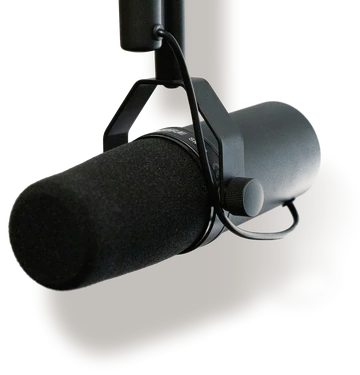
None of this means I’m done with podcasts or video. I love making them, and I’ll be back behind the mic. I’m also working on some audio and video ideas built for this site. They’re the most experimental part of all this, and they aren’t ready yet.
This only works if you tell me what’s working. Tell me what you want me to write about and what you’d change. Reply to this post on Bluesky, and I’ll read the replies.
The comments
The comment section was half the old blog. People argued with me and with each other. When I relaunched the site in 2015, I asked you to file bugs in the comments, with repro steps. I meant it. We fixed things together.
Running comments was also work. If you want to see what it looked like without anyone tending them, scroll to the bottom of Korby’s 2005 post. Within a year the comments turn into ringtone spam.
By 2018 the conversation had moved to Twitter and Reddit, and the comment boxes had gone quiet. On May 24, 2018, I turned them off. BetaNews said the blog was worth less without them. They had a point, and I never found a good way to bring that conversation home.
Comments, the 2026 way
I wanted comments back without running a database or fighting spam.
X was the obvious first stop. I have a lot of followers there, and there’s no open way to pull their replies onto a web page. X’s API charges half a cent for every post you read, and you’d need a paid developer account plus a server to keep the key private. That’s a lot of plumbing, and a lot of money, for a comment section.
If you found this post on X, welcome, and thanks for clicking through. You don’t need an account for anything here. Reply to me on X and I’ll see it, the same as always. I just can’t bring those replies onto this page. If you want your comment to live under the post, Bluesky is the way in.
Bluesky runs on an open protocol. One public call, getPostThread, returns a post and every reply to it. It doesn’t need an account or a key, and it works straight from your browser.
I didn’t come up with this. Emily Liu at Bluesky showed how in November 2024 and shared her code. Cory Zue turned that into a package anyone could add to a site within a day. Micah Cantor’s write-up walks through building it yourself on a static site, which is what I have. Kuba Suder matched his posts to their Bluesky threads automatically, and I borrowed that idea. Jim Ray’s bsky-conversation convinced me that quote posts belong in the conversation too.
How it works here
Each post loads one small script with no outside libraries. When I publish, I share the post on Bluesky from @hryb.me. When you open the post, your browser asks Bluesky for my most recent post that links here and shows the replies under it. Nothing is stored on my end.
Moderation stays with Bluesky. If I hide a reply there, or you delete yours, it’s gone from this page the next time it loads. Replies show up as plain text, so nobody can slip code onto the page.
A few details took longer than the rest. Replies nest four levels deep, and the sort order you pick sticks. Quote posts get their own section, and “bookmark” replies, the ones that are only a 📌 emoji, stay off the page.
This means comments are no longer confined to just the blog, because they simultaneously live in the social stream as well. Think of them as the qubits of the web: neither isolated replies nor simple social posts, but both at once.
Anyone can read the comments. To join in, reply on Bluesky.
Your turn
The comments are right below this post, and this one is the first real test. Reply on Bluesky and your comment shows up here.
Tell me what you want me to write about next, or tell me what I got wrong. Twenty years ago the comments made the blog better, and I’m betting they still can. I’ll see you down there ↓
If you want the longer story of what I’ve done and what I’m working on now, it’s on my About page.
Note: The ideas, content, structure and opinions here are human-generated. Specifically, this one. Typos are handmade and locally sourced. I only use AI for grammar, syntax and proofreading. If you want AI slop, you’ve come to the wrong place.